
What a “Boundary Survey” Means in Ontario
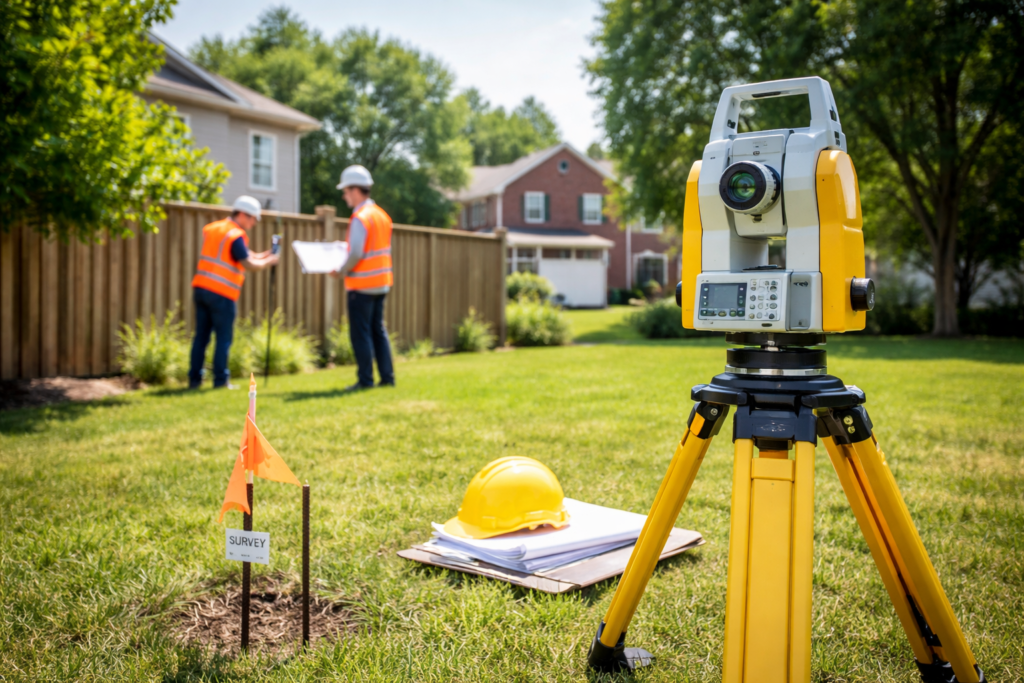
In Ontario practice, boundary surveying falls under cadastral (legal) surveying. The key idea is not simply measuring a fence or mapping what you can see on the ground; it is forming a professional opinion about where boundaries were originally established, based on evidence and well-established boundary law principles. This distinction is critical, because property boundaries are legal constructs, not just physical lines. The Association of Ontario Land Surveyors (AOLS) describes cadastral surveying as the practice of advising on and conducting surveys to establish, locate, define, or describe lines and boundaries, and emphasizes that only licensed members may carry out legal boundary surveys in Ontario. As a result, a boundary survey is not just a technical service—it is a regulated professional opinion that can be relied on for legal, financial, and planning purposes.
Why Boundary Location Is a Legal Question, Not Just a Measurement Problem
Homeowners often assume that a boundary is whatever line a fence has followed for years, or where a hedge or driveway seems to divide two properties. In reality, those visible features can be misleading. Fences can be misplaced, sometimes by several feet, monuments such as iron bars can be disturbed or removed over time, and legal descriptions in deeds can contain inconsistencies or reflect older measurement systems. In many cases, modern high-precision measurements do not perfectly match historical surveys, which means interpretation is required rather than simple calculation.
Because of this, boundary location is fundamentally a legal question supported by technical evidence. AOLS explains that boundary work requires a combination of research, locating physical evidence, measurement, calculation, analysis, drafting, and communication. A surveyor must weigh different types of evidence documentary, physical, and historical—and apply professional judgment when they do not align perfectly. This is often the case, and it is exactly where expertise matters most. The final boundary determination is therefore not just a set of coordinates, but a reasoned conclusion that can stand up to scrutiny in legal or municipal contexts.
Typical Situations Where You Should Consider a Boundary Survey
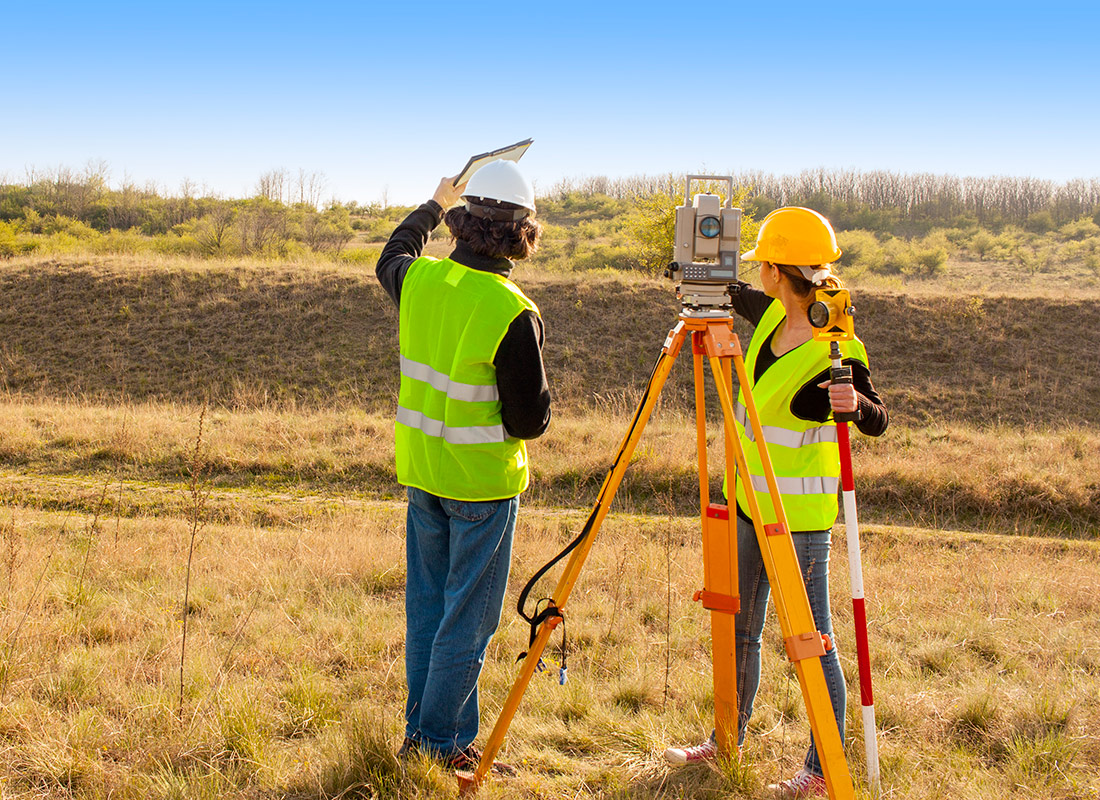
Boundary surveys become practical necessities whenever a decision depends on the true lot line rather than an assumed or informal “working line.” One of the most common situations is during a property purchase, especially when no up-to-date survey is available. Without a current survey, a buyer may not fully understand what is included in the property, or whether structures such as fences, garages, or additions encroach onto neighboring land.
They are also essential when building or altering structures near lot lines. Even small inaccuracies in boundary location can result in encroachments, which may lead to disputes, delays, or costly corrections. The same applies when installing fences, landscaping features, or other improvements where a relatively small shift in position can create conflict between neighbors. In these cases, a boundary survey provides clarity before issues arise.
Another important use is in resolving disagreements about property limits. When two parties have different assumptions about where a boundary lies, a professional survey provides an objective, evidence-based answer. AOLS explicitly frames boundary surveys as a key due-diligence tool and notes that mislocated fences and structures can lead to expensive litigation, project delays, and long-term tension between property owners.
How Boundary Surveys Interact with Zoning Setbacks in Toronto
A boundary survey is often the foundation document for zoning-related planning, particularly in cities like Toronto where zoning bylaws are strictly enforced. Setbacks are defined as the minimum required distances between a building and the property line, and they are always measured from the legal boundary—not from a fence, curb, or assumed line on the ground.
This means that if the boundary location is incorrect, even a well-designed project can fail a setback compliance check. For example, a building that appears to meet zoning requirements based on a fence line could actually be too close to the true property boundary. In practice, this can lead to permit refusals, redesign costs, or compliance issues after construction. For this reason, boundary surveys are often one of the first steps in the planning and design process, ensuring that all subsequent work is based on accurate and defensible information.
What You Receive at the End of Boundary Work
The deliverable from a boundary survey depends on its purpose, but it always reflects the surveyor’s professional findings and opinion regarding the property boundaries. In many cases, the result is a Surveyor’s Real Property Report (SRPR), which illustrates the boundaries of the property along with the location of buildings and other visible improvements. This type of report is commonly used in real estate transactions and financing.
In other situations, particularly those involving land severance or title changes, the outcome may be a reference plan (R-Plan). These are formal deposited plans that show surveyed boundaries, dimensions, and relevant features affecting the land, including easements or encroachments. They form part of the legal record and are used for registration purposes.
In addition to plans and reports, boundary work may also include the placement or re-establishment of physical markers on the property, such as iron bars, to indicate boundary corners on the ground. These markers provide a practical reference, but they are always supported by the underlying legal and analytical work carried out by the surveyor.